What earns the name
Most pants in a good wardrobe are quiet by design. They hold a leg line, take a wash, and let everything else in an outfit move around them. A statement pant takes the opposite job. It carries the look on its own and asks the rest to step back.
Three things do that work. Surface comes first: a woven stripe, a printed camo, a repair left where you can see it. Volume comes second, in a leg cut wide enough to change how you stand. Color and finish come third, quieter than either, still doing something.
Look across this grid and surface does most of the work. A print, a stripe or a visible mend is what connects these styles, far more than the width of the leg, and it is why they sit together here instead of inside the fit collections.
Stripe, camo and the visible mend
Stripe runs through several styles and does something different to each. The Billie in Rally Stripe puts it on a cropped, relaxed leg, where the vertical line keeps a wider cut from spreading. Annette in Detour sets it against a high rise and a straight leg, the cleanest of them. Cate in Weekender takes it onto a cropped relaxed trouser with the most room in the leg, so the stripe has further to travel and the pant reads as the loudest of the set.
Maria brings the camo, in a print that has come in and out of fashion often enough to have stopped being a trend.
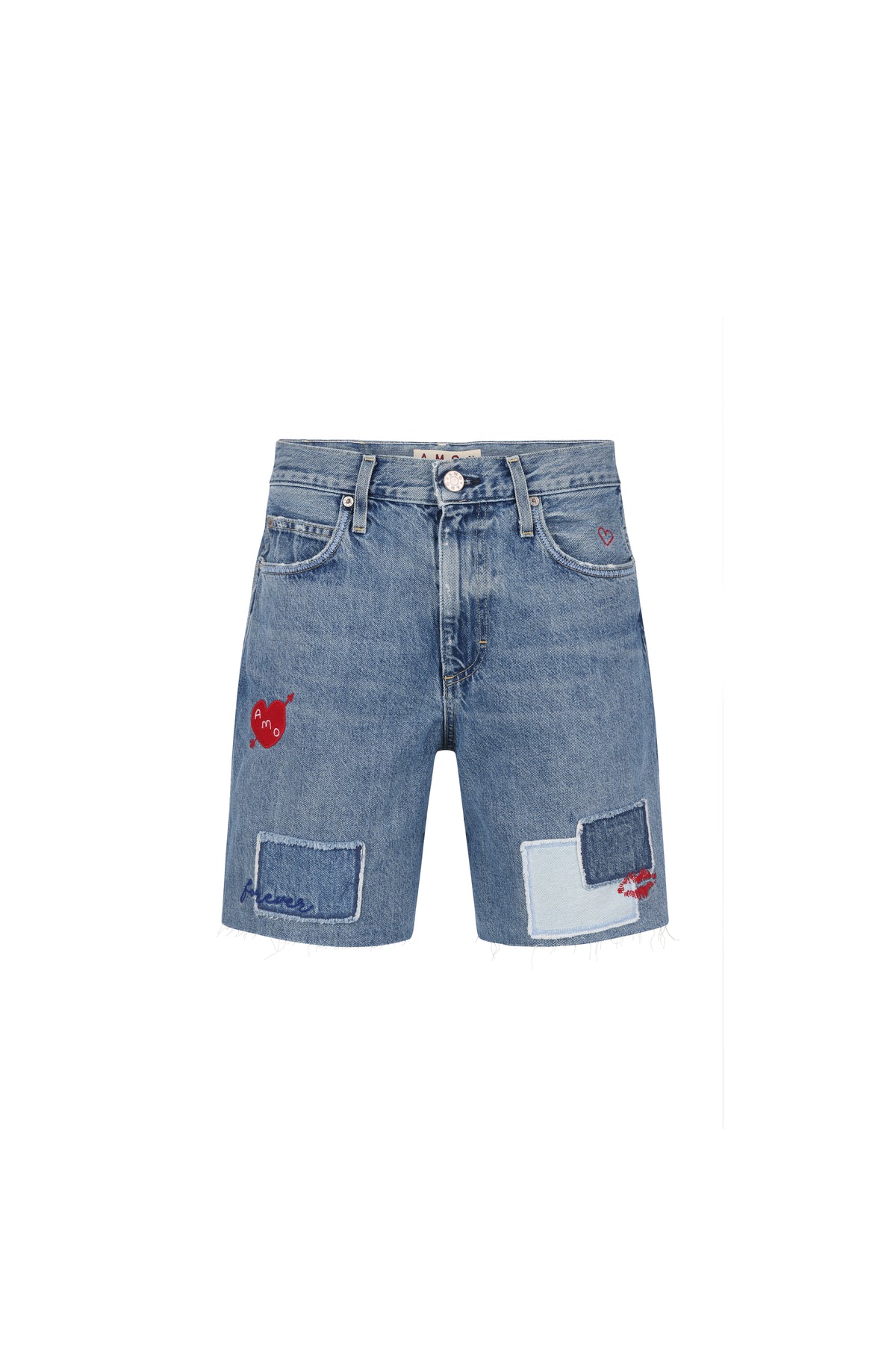
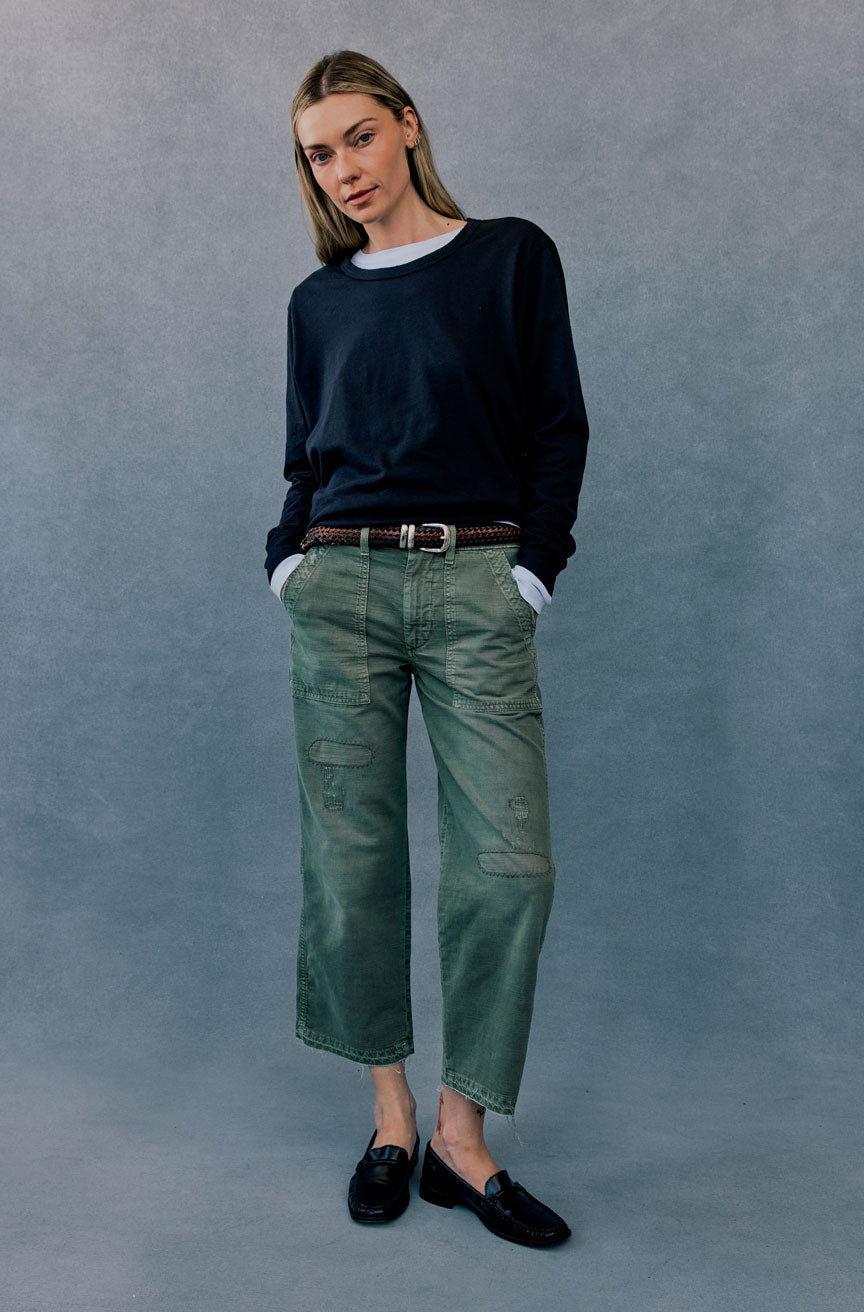
Then there is the repair work, and it is the most interesting thing on this page. The Easy Army Slouch Crop in Surplus Mended show their own construction. The mend is placed, stitched and left where the eye finds it, which is a decision somebody made rather than a wash effect applied at the mill.
Volume as the other route
Some styles make their statement through width. Donna Trouser is cut wide and cropped, which keeps the volume above the ankle and stops it swallowing the foot. Margot Trouser runs wide and full length from a low rise, harder to wear and more striking when it lands.
A wide leg lives or dies on its rise. Sitting the waistband low under that much fabric drops the visual weight toward the floor, so what you put on top decides whether the proportion holds.
If width is the thing you actually want, wide leg denim treats the silhouette on its own terms.
The denim half and the non-denim half
Denim makes up much of this grid, and denim holds a statement longest. Rigid cotton has the body to carry a printed or pieced surface without collapsing into it, so a stripe stays straight and a mend keeps its shape through a wash. The Billie turns up here more than once, in Shatter, Shadow, and Rally Stripe, which tells you the block takes surface treatment well enough for AMO denim to keep running it.
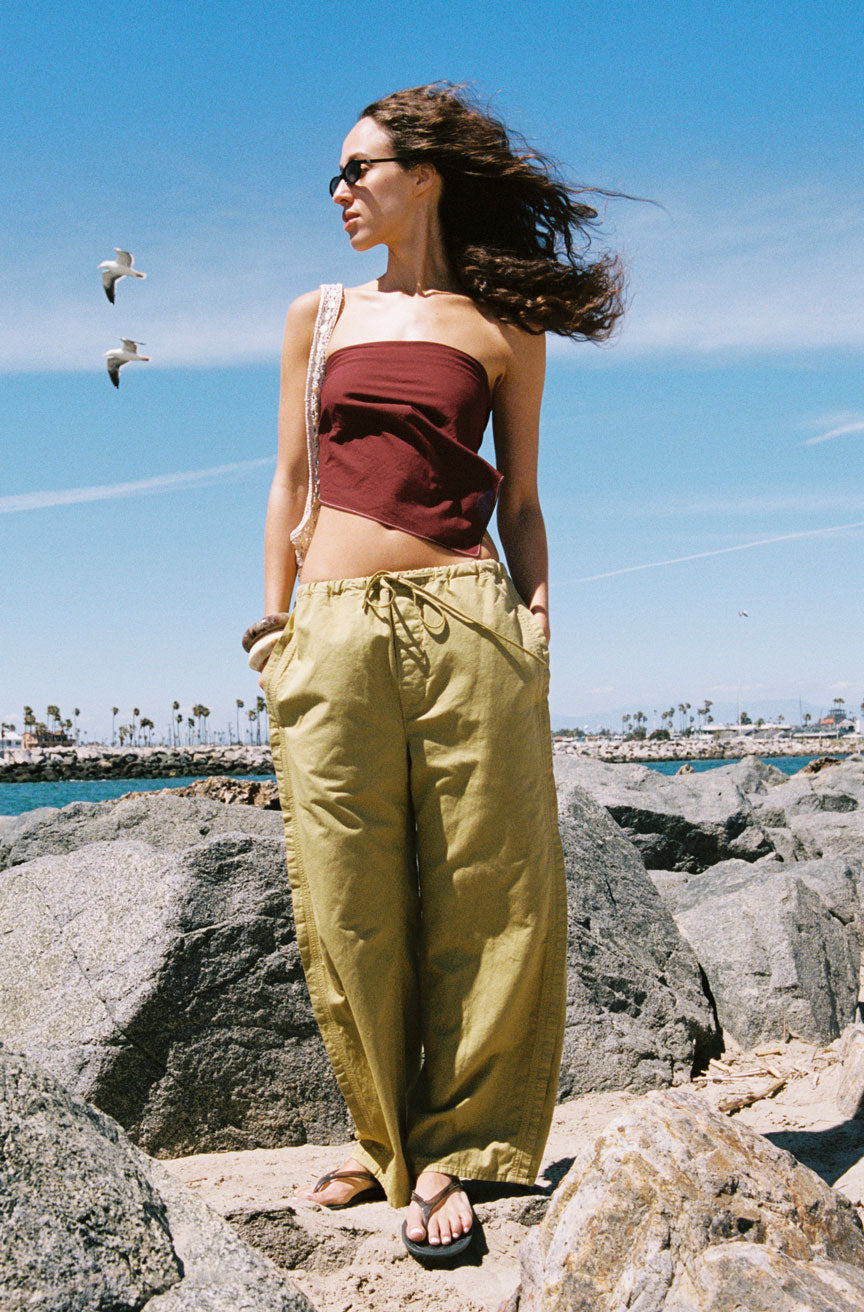
The non-denim pants do a softer version of the same idea. Simone uses a drawstring waist, so the statement is slouch and drape rather than print. Maria brings the camo. The Easy Army Slouch Crop brings the mending across from the denim side.
The full non-denim range sits in trousers and pants.
Wearing one loud piece
The practical question with any of these is what goes with it, and one idea covers most of it: let the pant be the only thing talking.
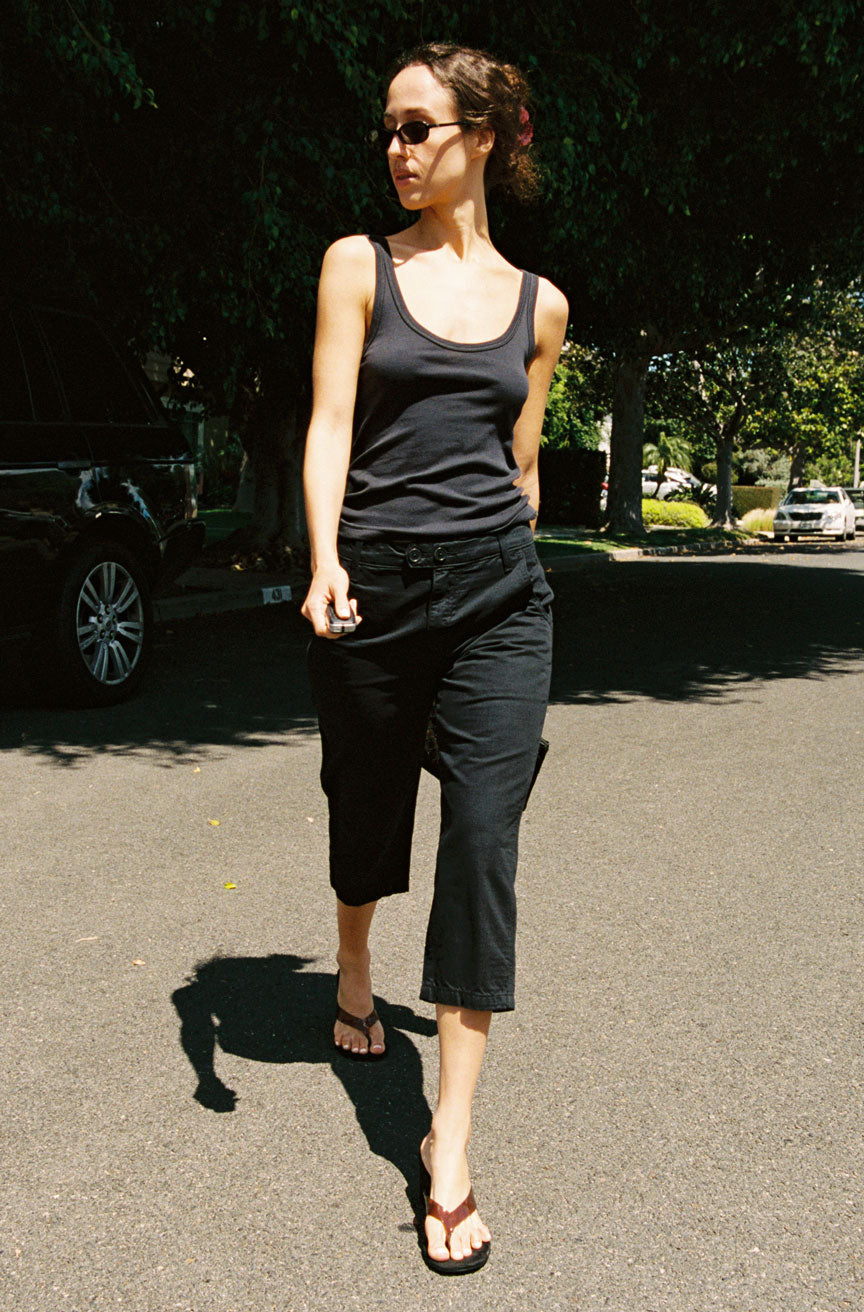
A plain tee in a flat neutral is the safest partner, which is why tees and these pants end up in the same cart so often. A tank does the same job with less fabric. If you want a second texture in the outfit, keep it in the same color family as the pant so the eye still reads one block.
The mended pieces sit at the upper end of the price range, because the repair on each one is done by hand.