How black denim gets its color
Most denim starts as indigo dyed warp yarn woven against a white weft, and the finish you see comes from washing that surface back. Black works the other way around. The color arrives as a sulfur or reactive dye, applied to the yarn before weaving or to the finished garment, and it covers the cloth far more completely. That is why a pair of black jeans for women reads as one continuous tone while medium wash jeans still show their weave. There is no warp and weft contrast left to break up. AMO's black denim comes in both a firm hundred percent cotton and a ninety-eight percent cotton with two percent elastane. Both start at full depth and age at different speeds. The rest of the washes are laid out across AMO denim.
Why black fades to grey, and how to slow it
Black dye sits closer to the surface of the cotton fiber than it penetrates. Every wash cycle, every hour of sun and every pass against a car seat lifts a little away, and what is left underneath is pale, untreated cotton. That is the grey. It shows first at the thigh, the seat and the hem, where a jean takes the most abrasion, and the hundred percent cotton pairs get there sooner because a rigid fabric works against itself harder. Slowing the process down is mostly a laundry problem. Wash cold, wash inside out, wash rarely, and keep the pair out of the dryer, since heat opens the fiber and takes dye with it. Spot clean where you can. Faded black jeans are also a look worth having on purpose, and dark wash denim ages along a similar curve in indigo.
Rises, lengths and fabrics
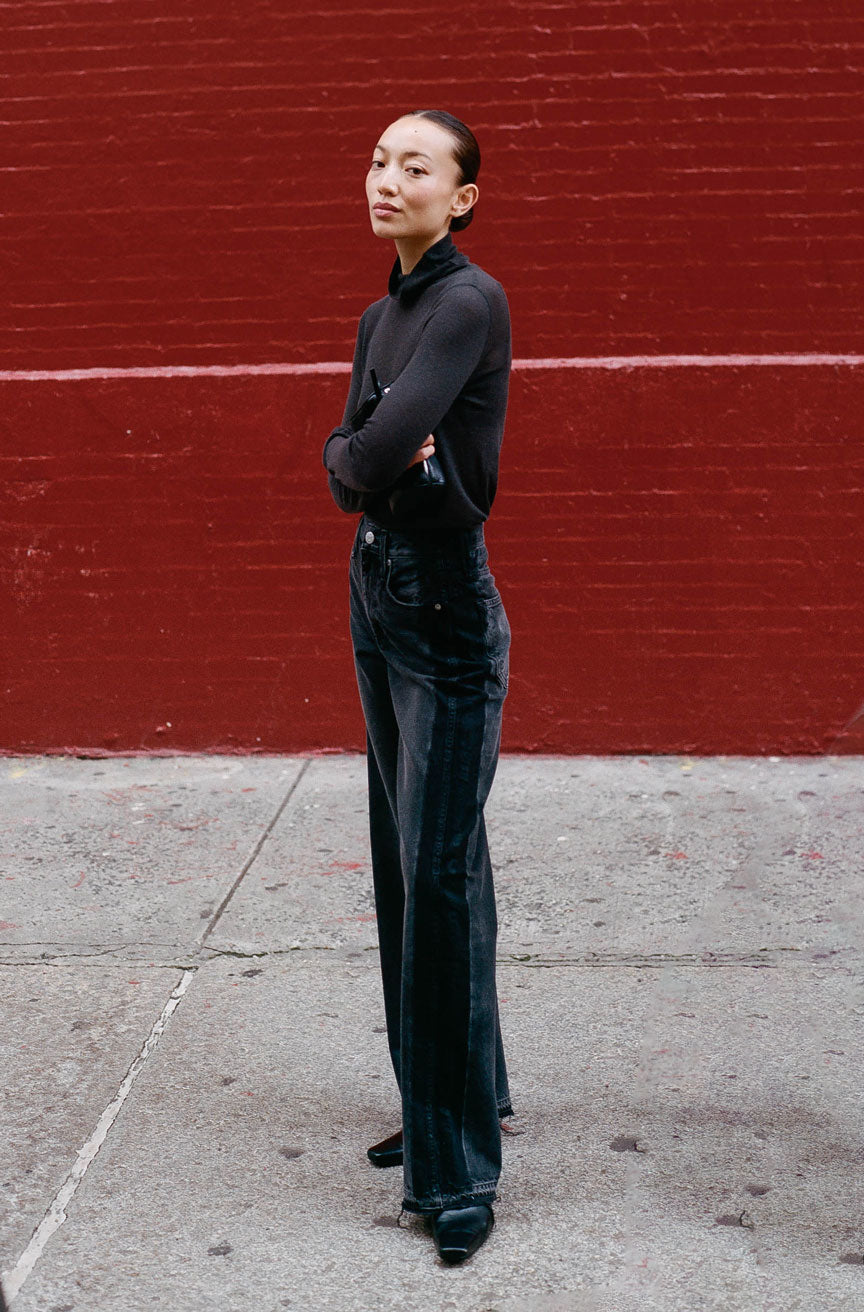
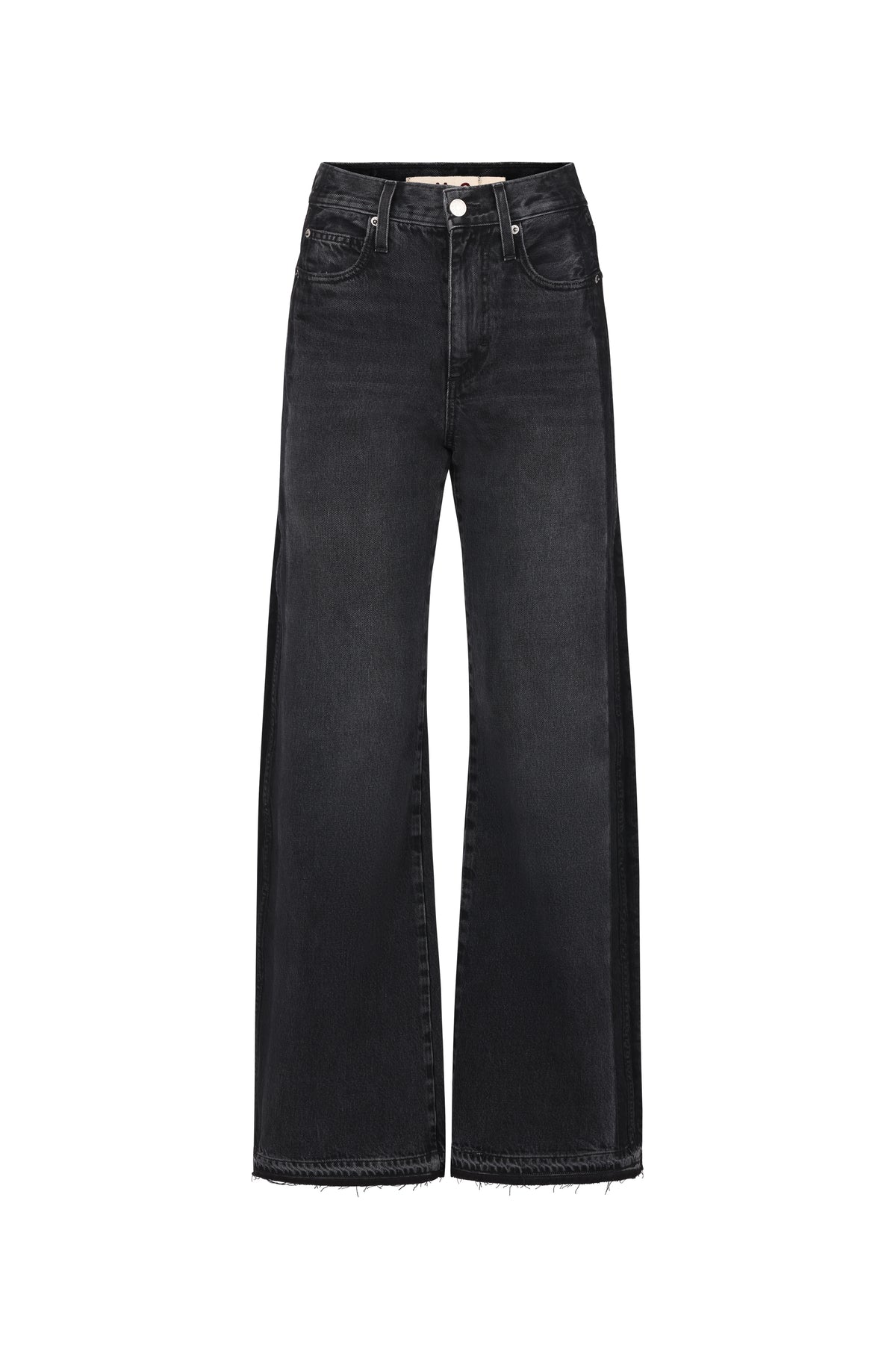
The collection splits by rise and by length. The high rise wide leg Fridas run a full thirty-two and a half inch inseam with a twenty-three inch leg opening, which is the shape that does the work of a trouser. Frida in Recall is a hundred percent cotton with a tonal track stripe down the leg. Frida in Black Oak carries two percent elastane, light distressing at the pockets and a released raw hem. The cropped styles sit at mid rise and stop above the ankle. 143 in Exposure is the slim, rigid hundred percent cotton on a twenty-six and a half inch inseam. Libby in Smokin is tapered through the leg with a little stretch and a twenty-seven and a half inch inseam. Billie in So Good is a relaxed straight with a seventeen and a half inch leg opening. The same silhouettes in other colors live on wide leg denim, slim denim and cropped denim.
Where black lands in a wardrobe
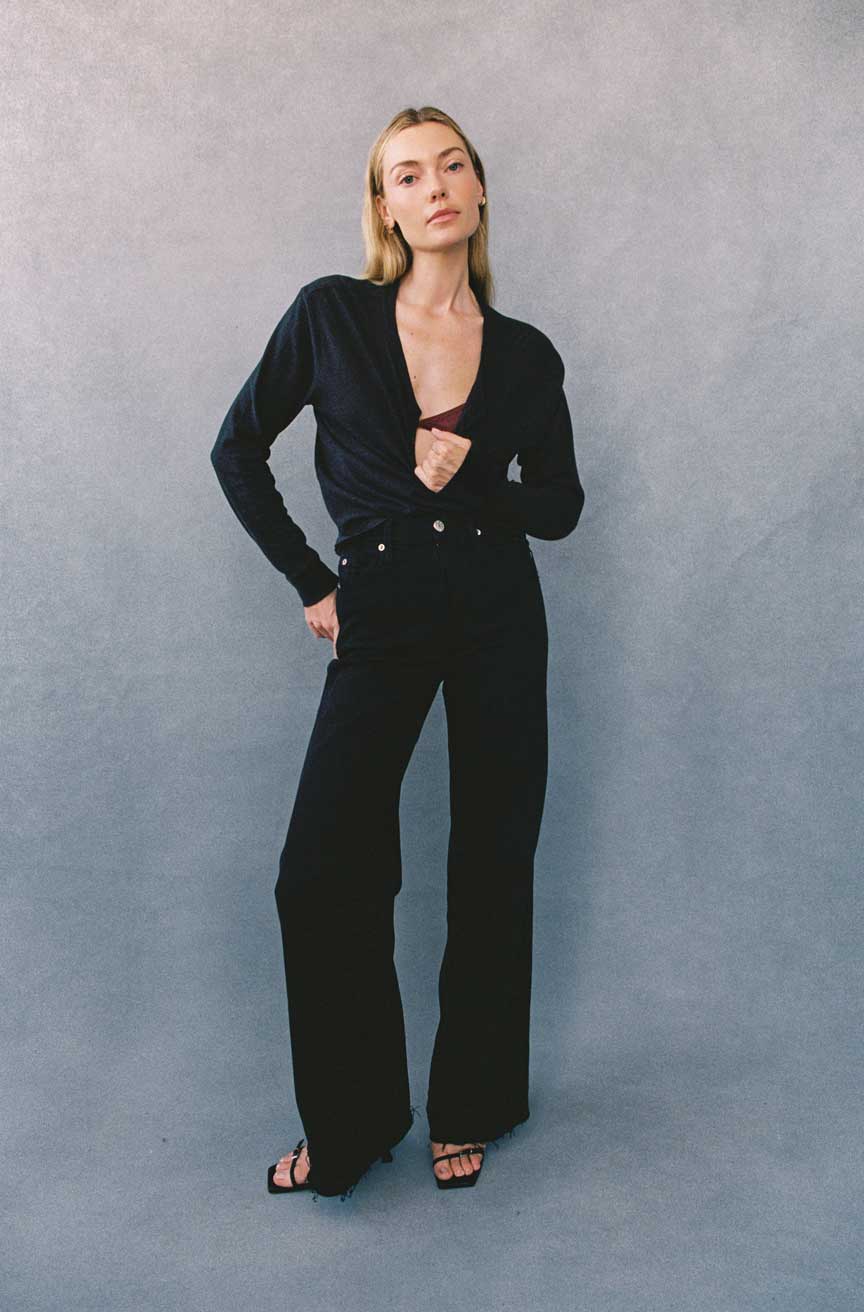
Black denim crosses a line that indigo generally does not cross. A flat black jean under a blazer or over a heeled boot reads as a trouser to most eyes, which is why it turns up at dinners and in offices where a light wash would look like a weekend. How well it holds that reading depends on how dark the pair still is, and an unbroken black surface stays tailored longest. Once the grey comes through at the knee, the same jean moves back toward casual. Length works on the same axis: the full inseam Fridas stay formal all the way down, and the cropped styles ask for a shoe you are willing to show. For the wider range of leg shapes, see straight leg denim, and light wash denim covers how a wash is built and how it ages.