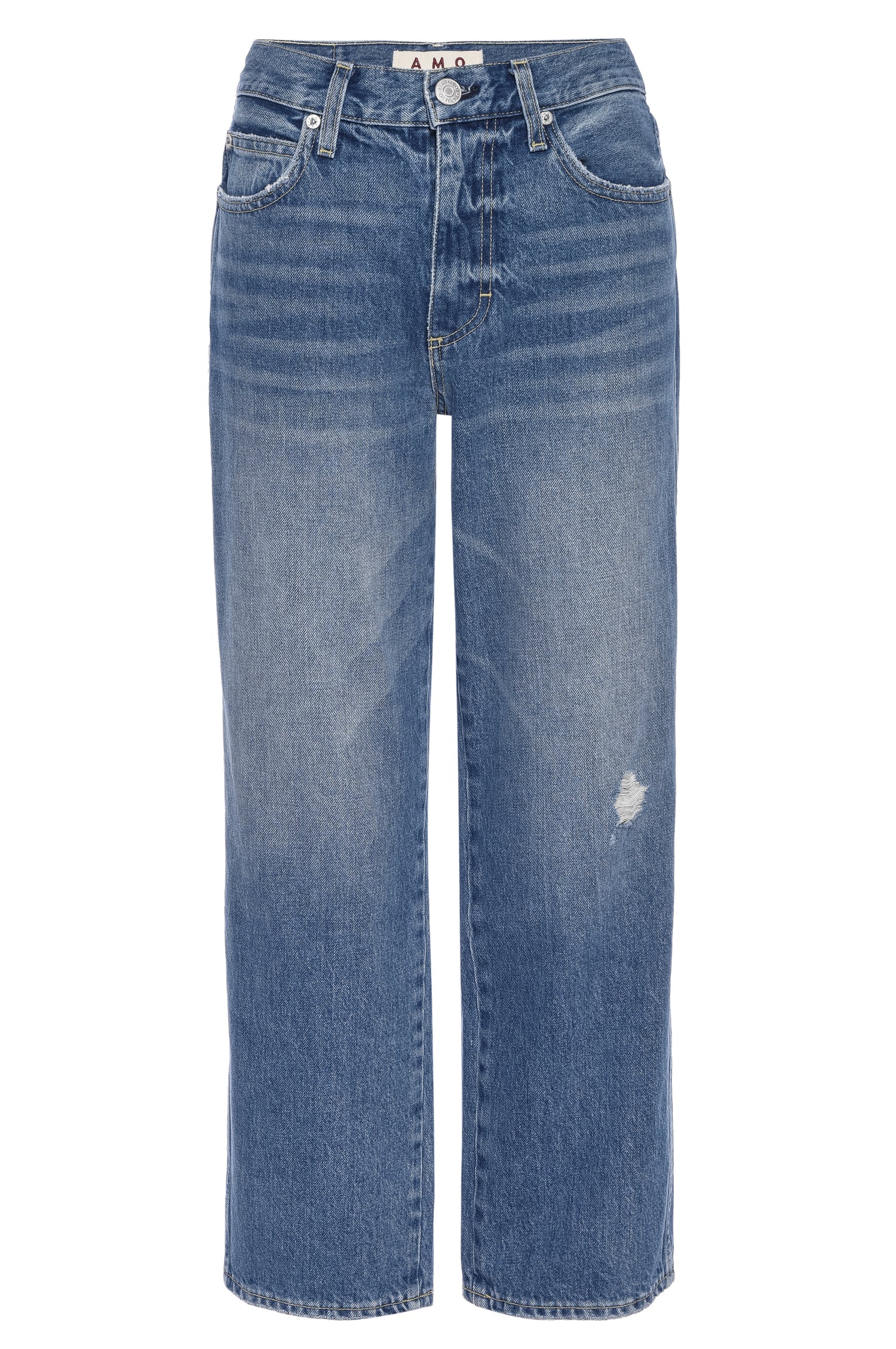
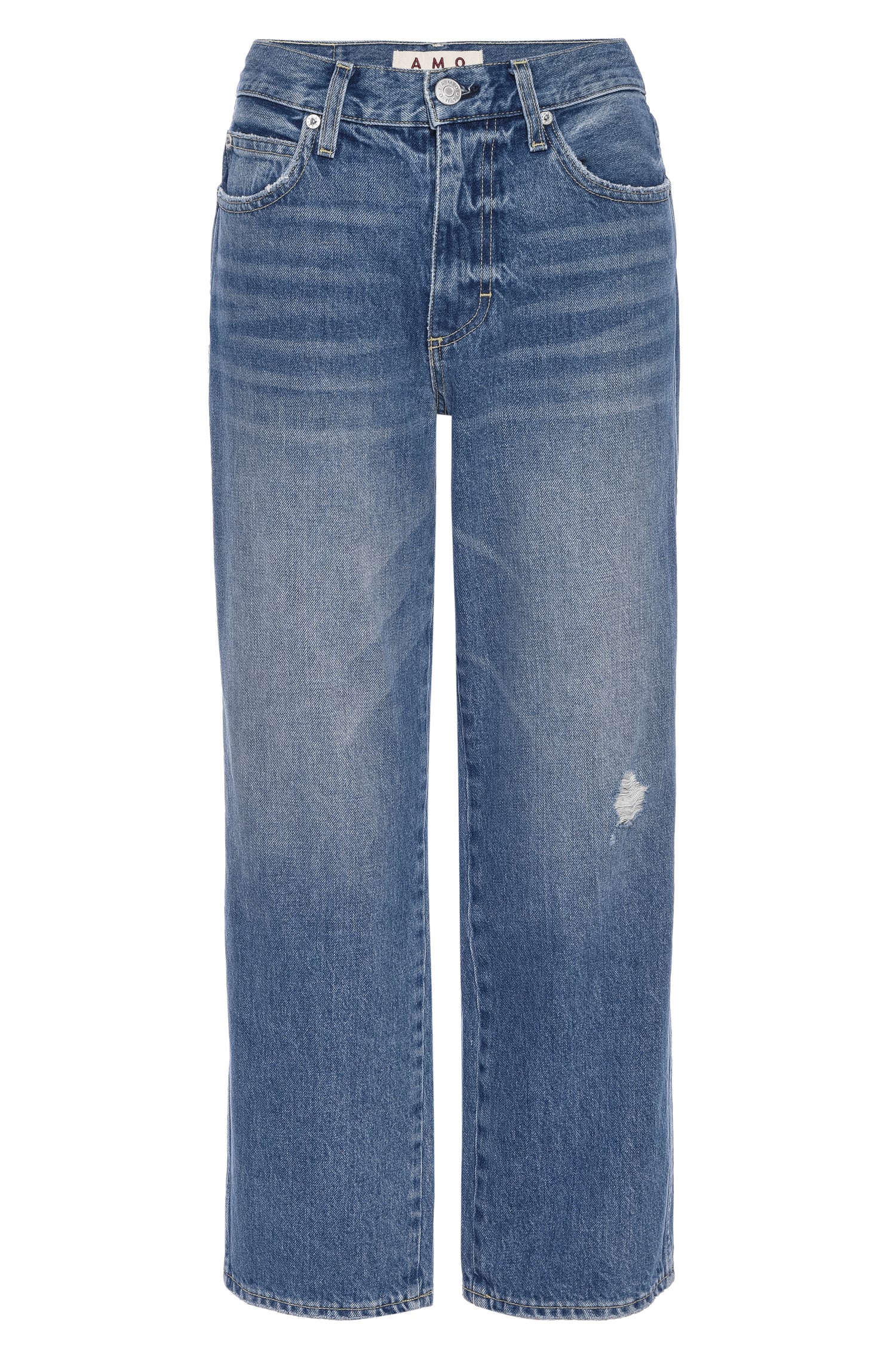
Where medium wash sits between light and dark
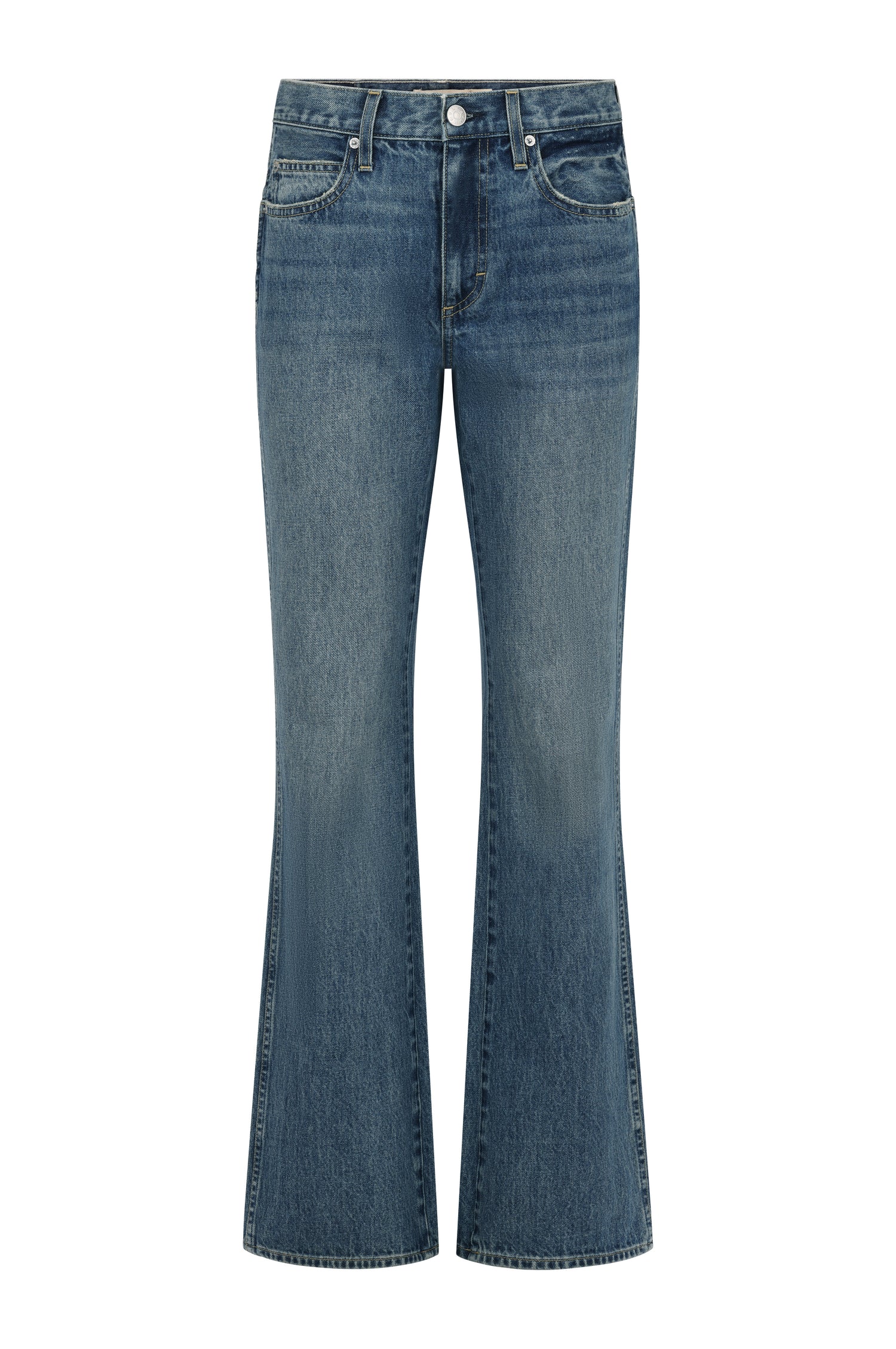
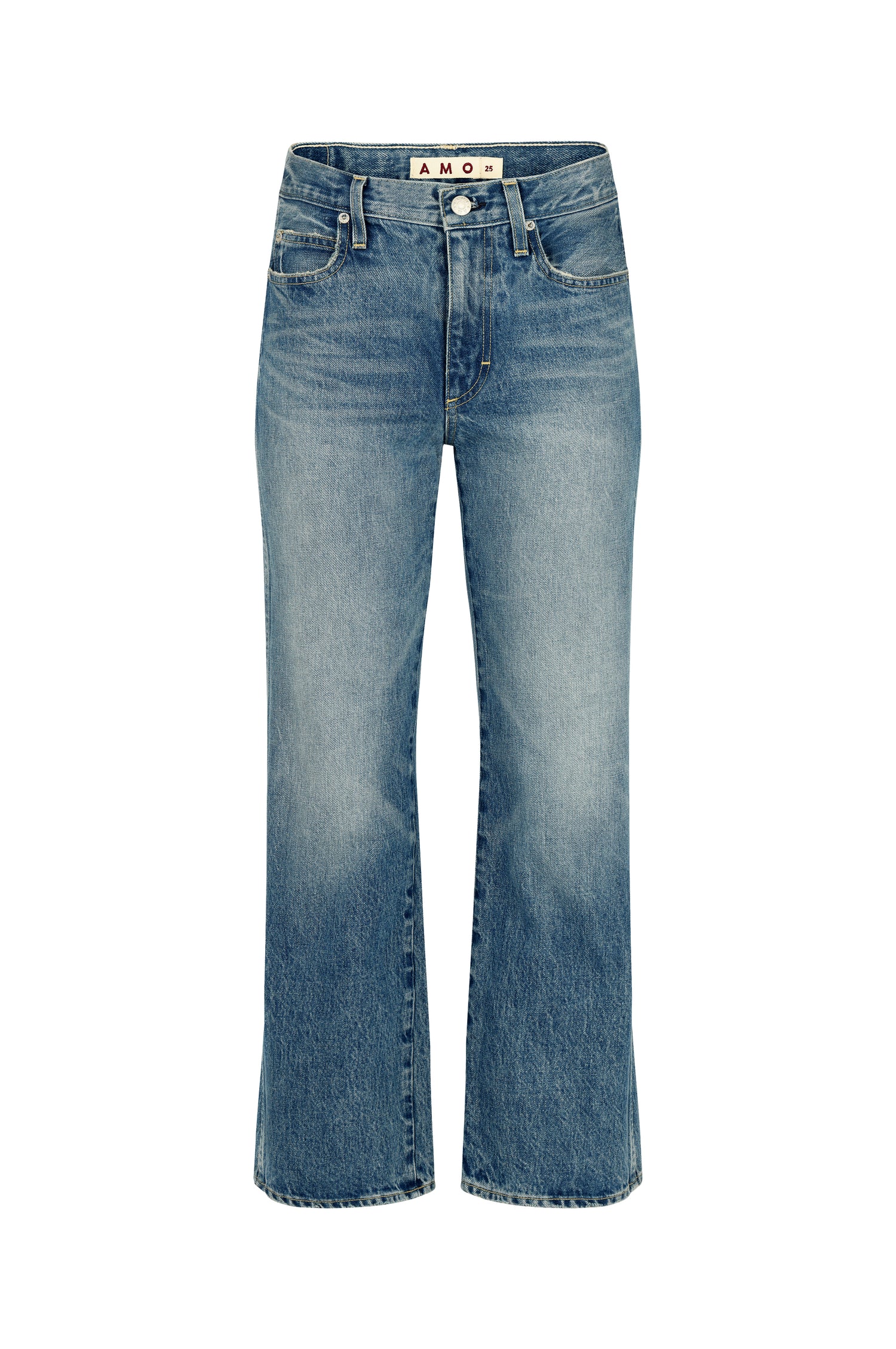
Denim washes run along a single axis of indigo depth. Light wash sits at the pale end, where enough dye has been taken back for the white cotton underneath to show. Dark wash sits at the other end, close to the depth the fabric had when it left the mill. Medium wash is the ground between them: clearly blue, visibly worn in, with enough pigment left for the topstitching to stand out against it.
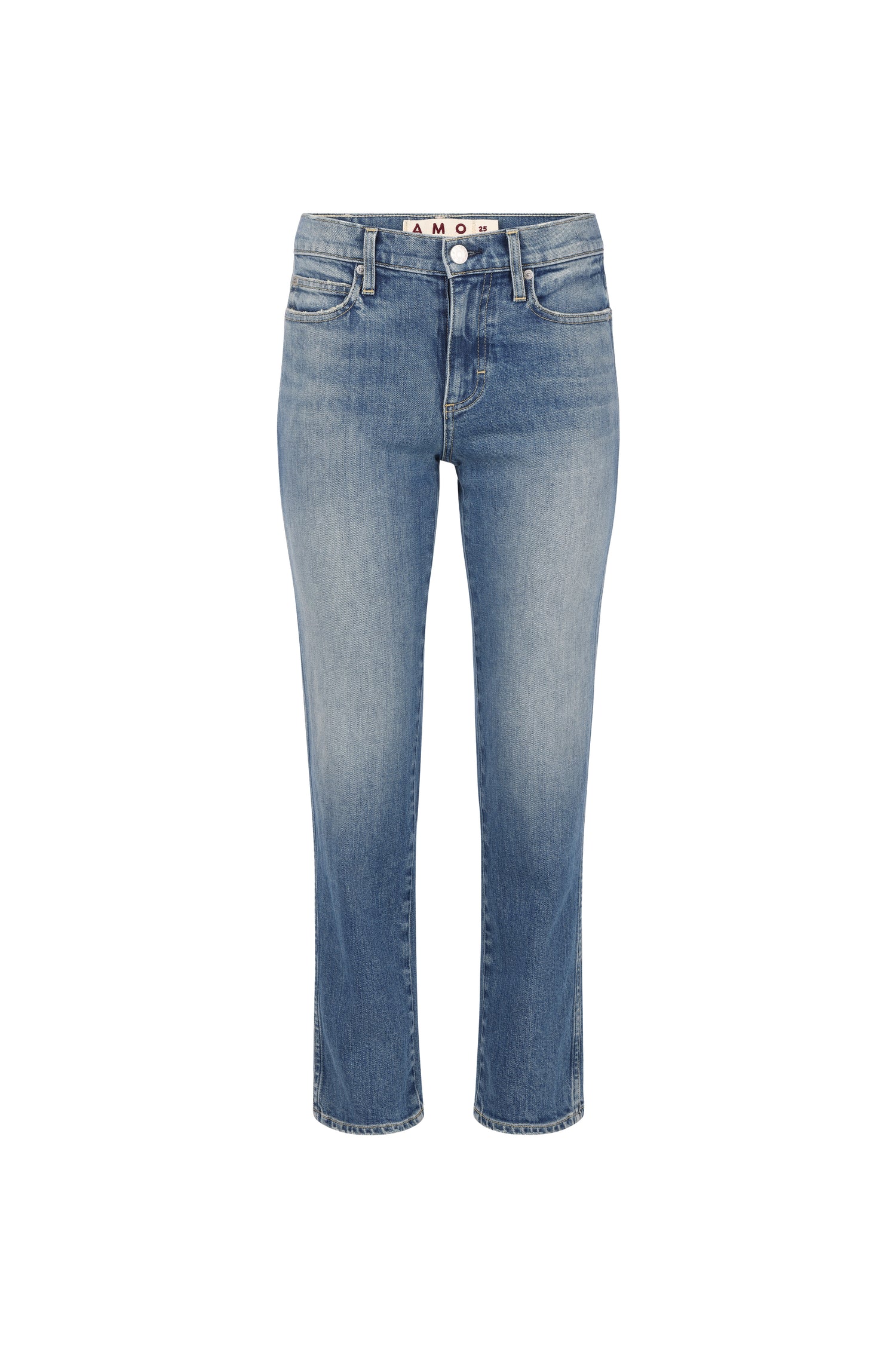
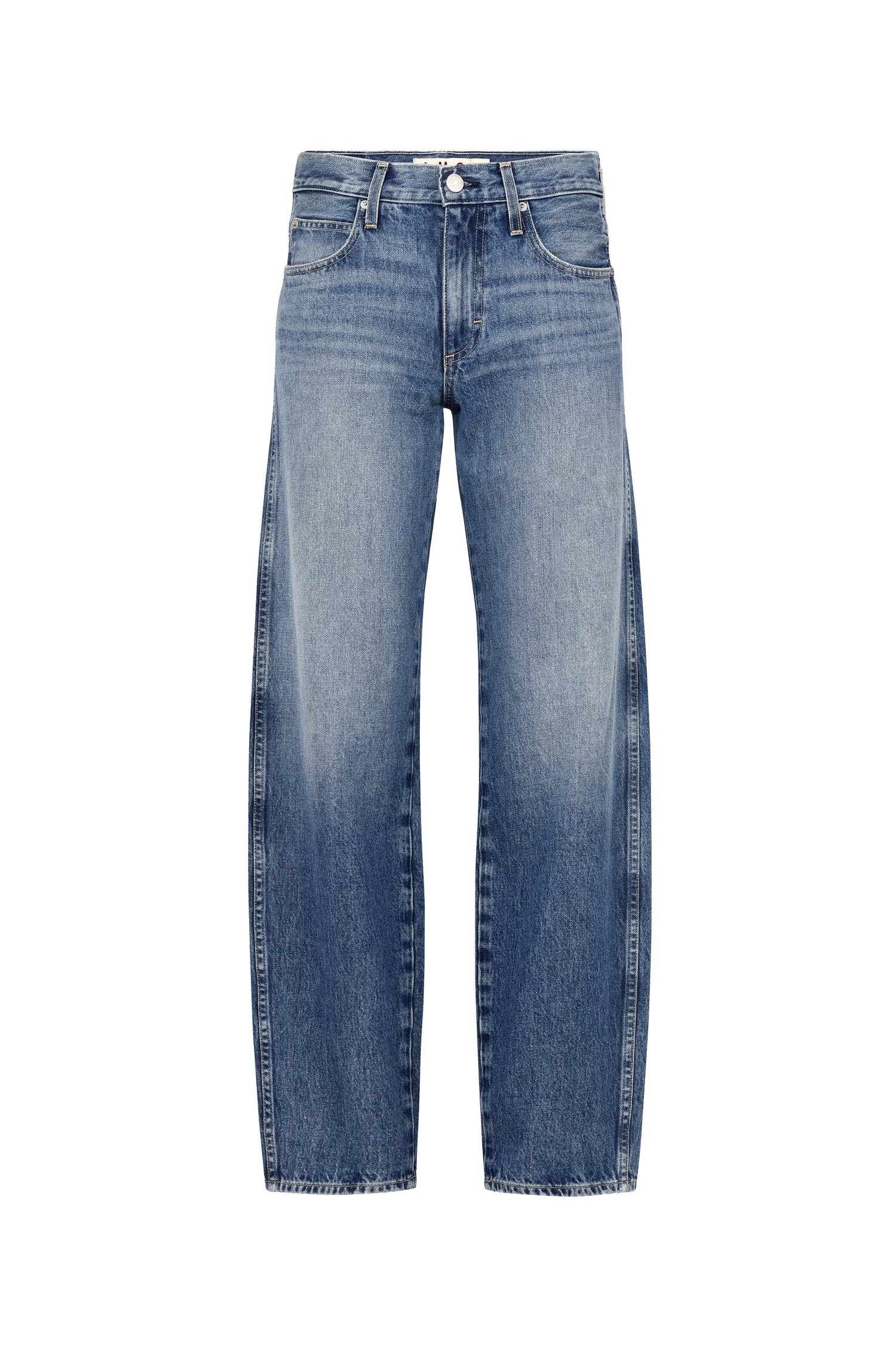
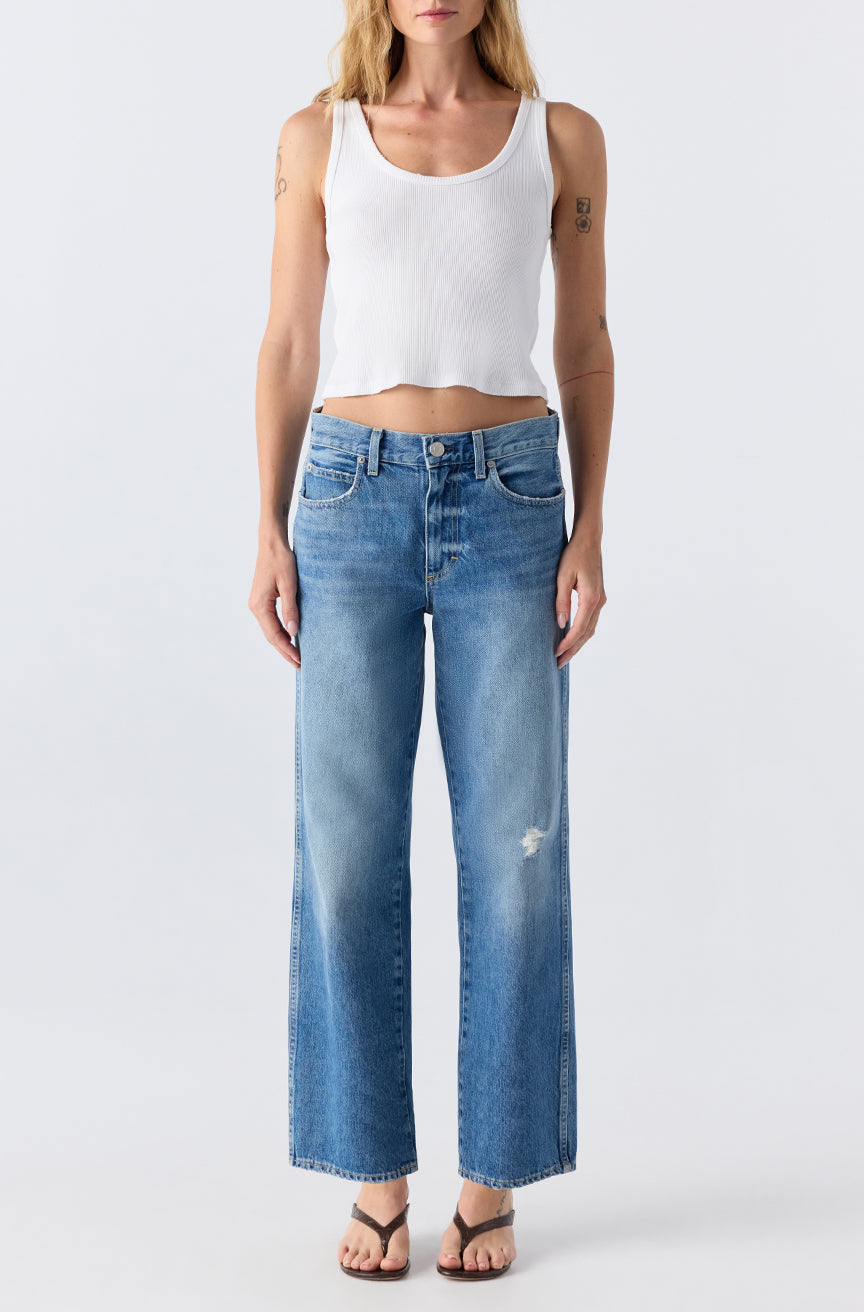
The mid-tone is the hardest wash to get right. A pale ground hides an uneven fade and a deep indigo hides it completely, while a mid-blue shows every inconsistency in the finish. You can see the standard on Billie, where the abrasion is placed by hand rather than sprayed across the leg, and on Tatum, where the wash stays even across a full-length relaxed straight that would expose any drift. For the paler end of the range, light wash jeans cover how those fades are built.
Why medium wash carries the most
Mid wash and medium wash describe the same thing. You will see both terms on jeans finished in the middle of the indigo range, and some retailers add medium blue as a third label for the same depth.
For many women this is the most useful wash in a wardrobe, because it competes with the least. A pale wash pushes an outfit toward summer and a deep indigo pulls it toward evening, while a mid-blue holds its position against black, white, cream, olive and every brown in a shoe rack. It also behaves the same way in daylight and lamplight, which is the practical reason a pair like Odette or Frida gets worn on consecutive days. Everything else in the women's jeans collection becomes easier to place once you own one.
Indigo and how a mid-tone holds it
Every blue jean on this page starts as indigo. Indigo is unusual among dyes because it never fully penetrates the fiber. It binds to the outside of each yarn and leaves a white core underneath, which is the whole reason denim ages the way it does. Every time the fabric folds against itself at the hip, the knee or the seat, a little surface dye leaves and a little of that white core comes up.
A medium wash is already partway through that process, so it keeps moving faster and more visibly than a dark one. Regina shows it plainly, cut from 100% cotton with no stretch fiber to hold the weave still. Billie is rigid for the same reason. To start further back in the process, look at dark wash jeans.
The fits available in this wash
A majority of AMO’s denim collection falls within the medium wash, covering almost the full range of shapes and rises.
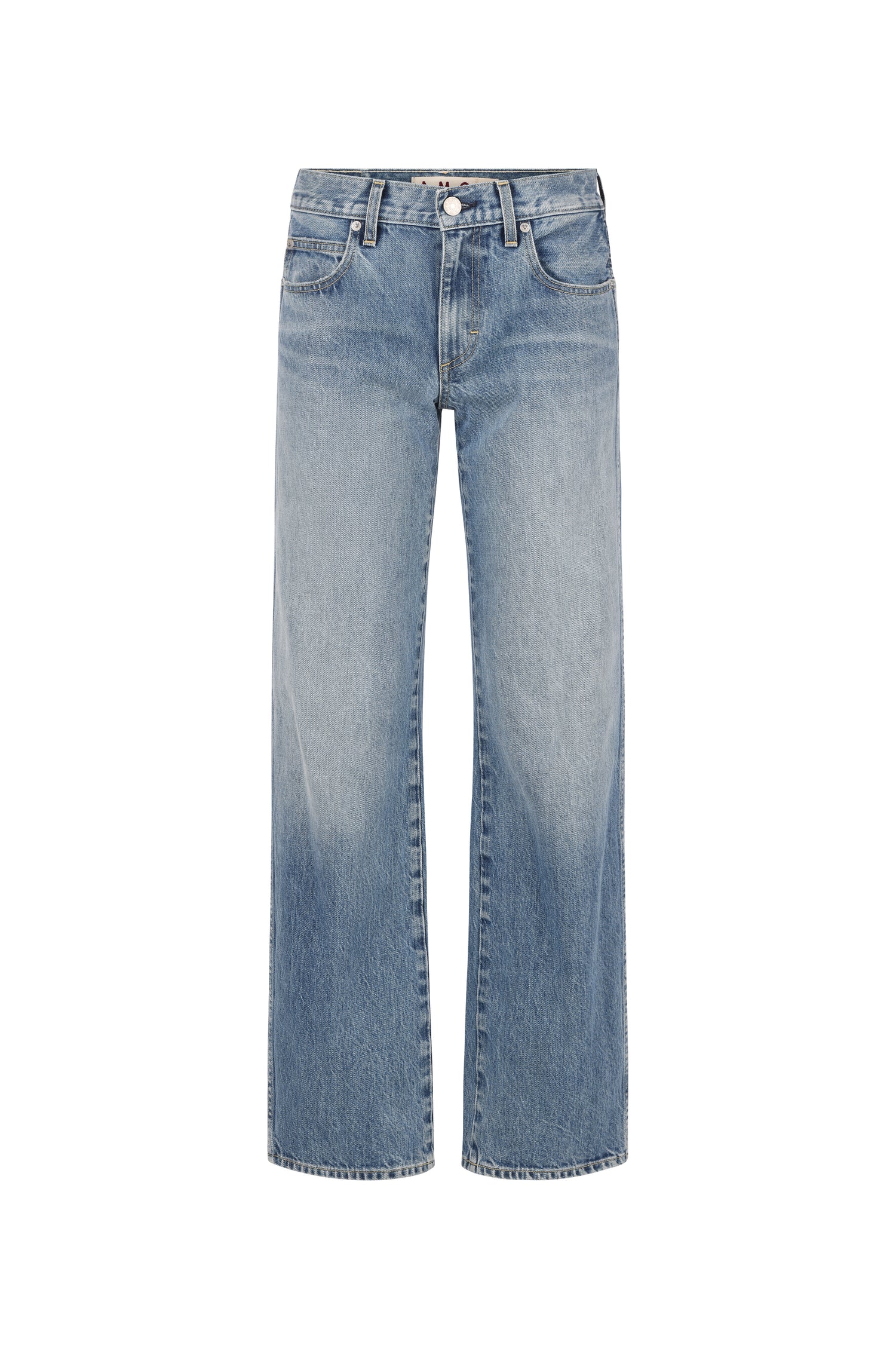
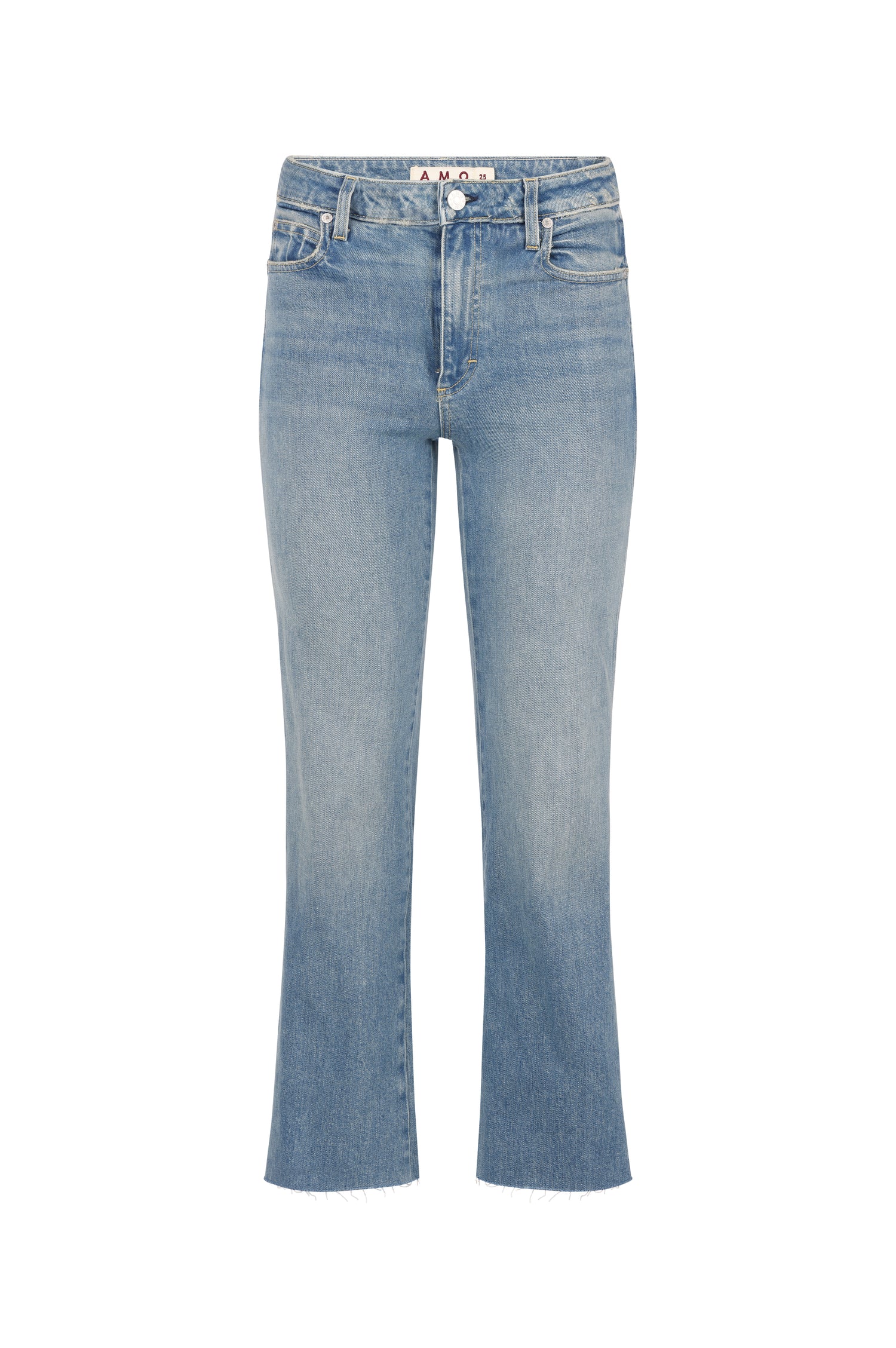
The straight leg is the foundation of the collection, with the deepest range of fits and proportions. Billie is the cropped wide straight leg the brand is best known for, mid rise and rigid with hand-applied distressing, and Billie Tall is the same jean cut longer. Tatum runs mid rise and relaxed with a subtle taper below the knee. Odette drops the rise low and keeps the length full. Loverboy takes a straight leg high on the waist and crops it above the ankle with a frayed hem and a button fly.
Wide leg is covered by Frida at a high rise and Regina at a low one. Marcenia Boot handles the bootcut, cut to sit low on the hip with a slouchy leg and a raw hem that stacks. Robbie splits the flare between full length and cropped, and Georgia Crop finishes as a stretch kick flare with a side slit. The Easy Army Trouser in denim brings patch pockets and a dropped seat to a cropped straight.
Rise changes how any of these sit through the waist and hip. The mid rise jeans collection carries that explanation in full, and how the four leg shapes differ sets slim, straight, relaxed and wide leg out side by side.
What medium wash sits next to
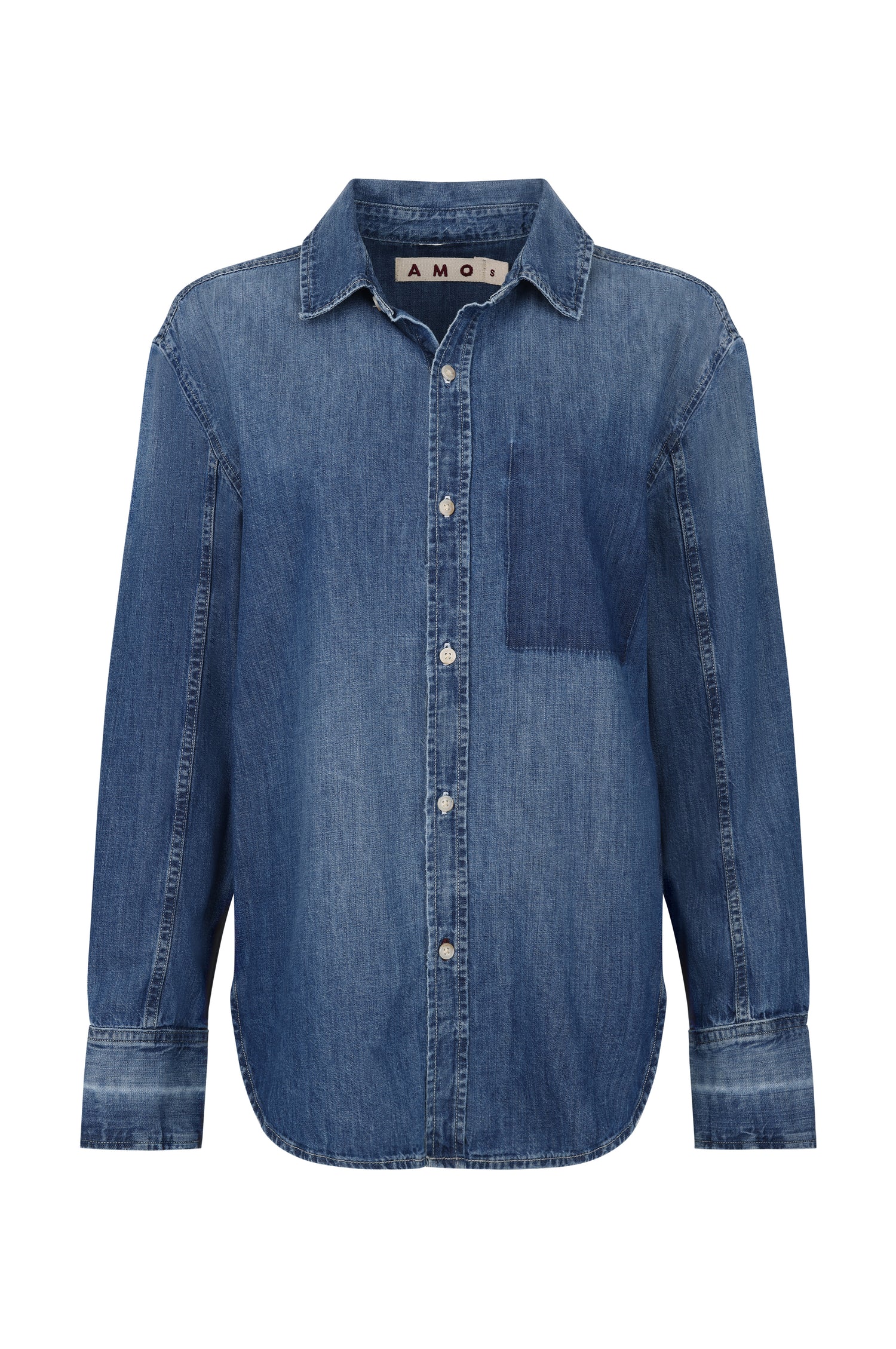
Contrast is what makes denim on denim work. Two pieces at the same depth can flatten into one block of color, so the pairing works best when there is some distance between the tones. The Denim Ruth Oversized Shirt is a medium wash, making it an easy match with dark, light, or white denim. Medium wash jeans also pair naturally with white, black, and tonal pieces when you want less contrast.
Shoes follow the same logic. A mid-blue takes on brown and tan more easily than a pale wash does, and it takes on black more easily than raw indigo. Georgia Crop is built around that: the side slit at the hem is there to keep the shoe visible. In summer the counterpart to all of this is white denim, and in autumn the same jeans go under denim jackets at a contrasting depth.