
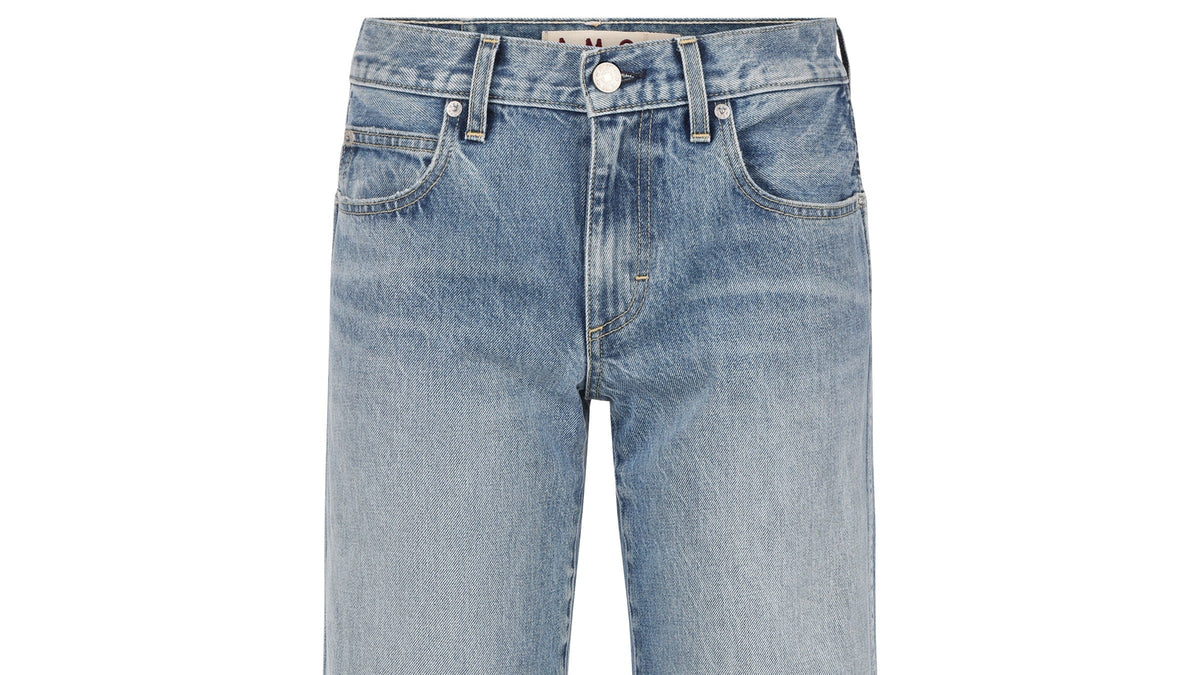
Vintage wash jeans are new jeans washed to look old. The finish fades and softens the denim at the factory, so the color and texture read as worn in from the first wear, without the years behind them. It's a finish, not a decade. Genuinely vintage jeans are simply old.
AMO Denim, founded in Los Angeles in 2014, makes its vintage washes in Los Angeles. You can see the full range in the vintage wash jeans collection.

What Are Vintage Wash Jeans?
The wash copies what time does to a favorite pair. Color lifts, the fabric loosens, and the fade gathers where real jeans wear first: the thighs, knees, seat and hem. A good vintage wash puts those details in the right places instead of spreading a flat, even fade across the leg.
Real vintage denim is a different thing. It's secondhand, so its size, fit and condition depend on its history. A vintage wash gives you the look in a modern cut and a size you can order with confidence. Online, the words vintage, vintage inspired and vintage wash get used interchangeably, so read the product description to see whether you're getting a finish, a style or a used pair.
How Vintage Wash Denim Is Made
AMO Denim makes its vintage finishes with an ozone chamber wash. Electricity generates ozone, a natural gas, inside a sealed chamber, and the gas fades the denim in a way that imitates years of use. According to AMO Denim's practices page, the method uses less water than a traditional wash and no chemicals, and it still produces an authentic wash.
Stonewashing is the older, better known method. Denim tumbles with pumice stones, which scuff the surface and soften the fibers. When possible, AMO Denim uses a mix of real and engineered stones, which takes about half as many stones as regular washing, and adds natural enzymes that cut water use in the wash by 25%. The faded creases that fan across the hips and thighs are called whiskers, and they're placed where real wear would leave them.

Vintage Wash vs Other Wash Jeans
Washes differ mainly in how they get their color. The table lines up the common ones.
| Wash | Look | How it gets there | Best for |
|---|---|---|---|
| Vintage wash | Faded, soft, lived in | Washed during production to imitate natural wear | Everyday wear, dressed up or down |
| Raw denim | Dark, stiff, unwashed | No finishing wash; fades only through wear | Anyone who wants to build their own fade |
| Light wash | Light blue, bright | Washed heavily to lift the color | Casual outfits, warmer weather |
| Dark wash | Deep indigo | Minimal fading | Dressier outfits |
| Acid wash | Mottled, high contrast | A process that creates strong contrast | Retro, statement looks |
| Distressed | Rips, fraying, abrasion | Damage added on top of any wash | Relaxed, casual settings |
People mix up distressed most often. Distressing is damage: rips, fraying and abrasion added on top of any wash, so a pair can be dark and distressed or vintage wash and distressed. Vintage wash is about color and softness, and a pair can have no damage at all. Light wash overlaps too, since many vintage washes are light blue, but light wash names a shade and vintage wash names a finish.
Why Choose Vintage Wash Jeans?
The appeal is simple: you get the worn in look without the wearing in. The pair is soft from the first day, and because it's already faded, the color changes little as you wear it. The jeans you buy are close to the jeans you keep. If you're weighing finishes against fit and fabric, our guide on how to choose premium jeans covers those.
How to Choose Vintage Wash Denim
Begin with measurements. Lay a pair that fits you well flat, note the waist and inseam, and check them against the size guide before you order. Then pick the shade. Light wash is bright and suits warm weather. A medium wash works across seasons and with more colors, which makes it the easier first pair. Open the light wash and medium wash collections side by side to see how each reads in daylight.
Cut comes last. A straight or relaxed leg is the easy starting point. Wide leg adds volume and looks best on a high rise, and a slim fit gives a closer line. The vintage inspired jeans page and the vintage wash jeans collection list the styles.
Stretch Denim or Rigid Cotton?
The fabric decides the stretch, not the wash. Rigid cotton starts out structured and softens with wear, and stretch denim gives right away. Several AMO Denim vintage washes, including the Billie in Warmth and the 143 in Saltwater, are 100% cotton, so expect a firmer first wear. The fiber content is listed on each product page.
How to Style Vintage Wash Jeans
The wash already has character, so keep the rest simple. Pair wide leg jeans with a fitted top to balance the volume. On a light wash, a navy or black top makes the fade stand out. Sneakers keep it casual, and heeled boots with a structured jacket push it toward dressy.
A crisp white tee works with every wash. Tuck it into a high rise for a clean line, or wear it loose over a straight leg for the weekend.

How to Wash and Maintain Denim Jeans
Wash them inside out in cold water and hang them to dry away from direct sun. Washing less often keeps the fade where it is, and a short cold cycle protects both the wash and the fibers.
Frequently Asked Questions
What does vintage wash mean on jeans?
Vintage wash is a factory finish. The denim is washed and treated during production so it comes out faded and soft instead of dark and stiff. The label describes how the jeans look and feel. It says nothing about their age or what they're made of.
What color are vintage wash jeans?
Most are light to medium blue, and faded black exists too. AMO Denim's vintage washes include Saltwater, a light blue, Warmth and Smudge, two mid blues, Admire, a deeper indigo, Metaphor, a dark indigo, and Surplus Mended, a faded army green. The collection page shows each shade.
Do vintage wash jeans keep fading?
Only a little. The jeans are already faded, so later color change is subtle. They keep softening as you wear and wash them, and the knees and seat can lighten slightly, but the overall look holds for a long time.
Are vintage wash jeans stretchy?
It depends on the fabric, not the wash. A vintage wash can go on rigid cotton or on denim with stretch, so check the fiber content on the product page. Several AMO Denim vintage washes, such as the Billie in Warmth, are 100% cotton.
Can you dress up vintage wash jeans?
Yes. A white tee, heels or a structured jacket moves vintage wash jeans from casual to dressed up. Medium and darker shades read dressier than the lightest ones, and a clean hem helps.
To see the range, browse the AMO Denim vintage wash jeans collection.